Cooking Lesson in Morocco
Wayne and I spent two unforgettable weeks in Morocco, visiting my cousin Doug, meeting a few of his friends and some of their families, marveling at the arid beauty of the High Atlas Mountains, falling asleep to ocean waves, and eating our way through the country. We traveled with my cousin Judy (Doug’s sister), Connie (Doug’s sister-in-law), and Gary, the only non-family member, but a long-time friend of Doug’s and mine.
You can let out a sigh of relief right away that I won’t impose our Google file collection of 1,300 photos on you. Neither will I give you a complete account of our travels. Instead, I offer one day, probably my favorite memory of the trip.
Moha, a friend of Doug’s, served as our driver for the entire two weeks. He runs a business driving tourists in a van he kept very clean in spite of all the mud and dust we encountered. Fortunately for us, Moha not only drove us from place to place, but offered us friendship. He eagerly arranged for us to meet his family, taking us to both an older sister and a younger sister for tea— bountiful spreads each time. When I asked him later whether they might be offended that we couldn’t do justice to the amount of food offered, he explained that hospitality means offering much more than anyone can eat. It would appear stingy to offer a small amount. That could well be a metaphor for our entire trip—the country offering much more than we could possibly take in.
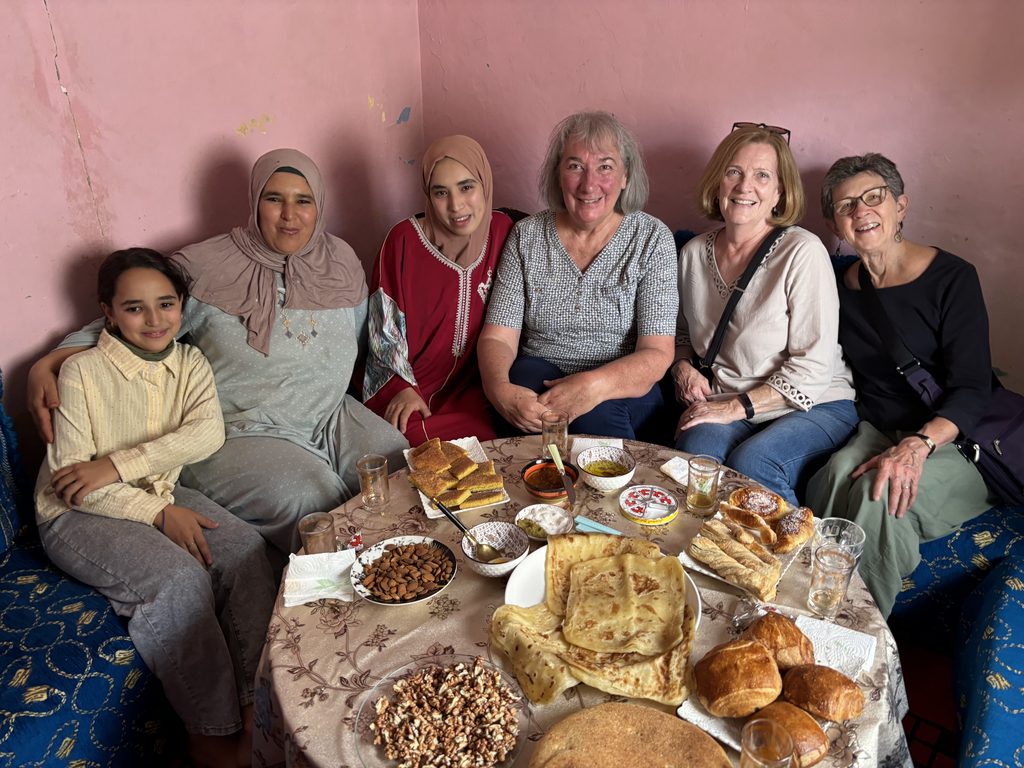
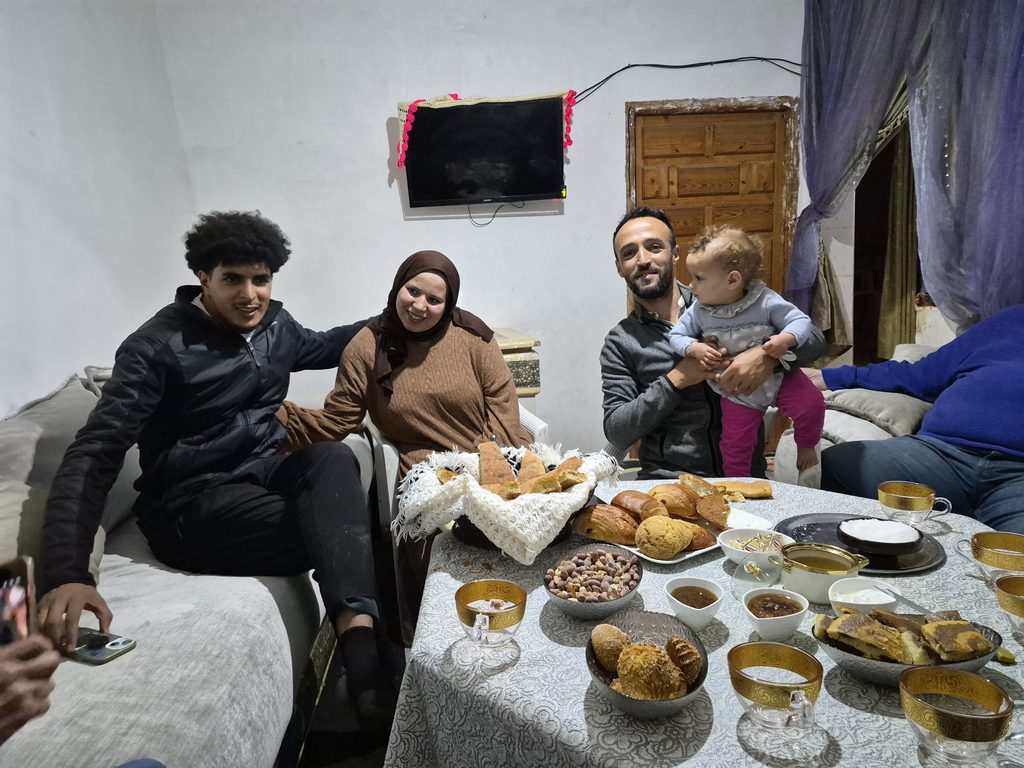
The centerpiece of the family visits was a day-long cooking lesson Doug had arranged with Moha’s mother and two sisters-in-law. The day included much more than cooking lesson.
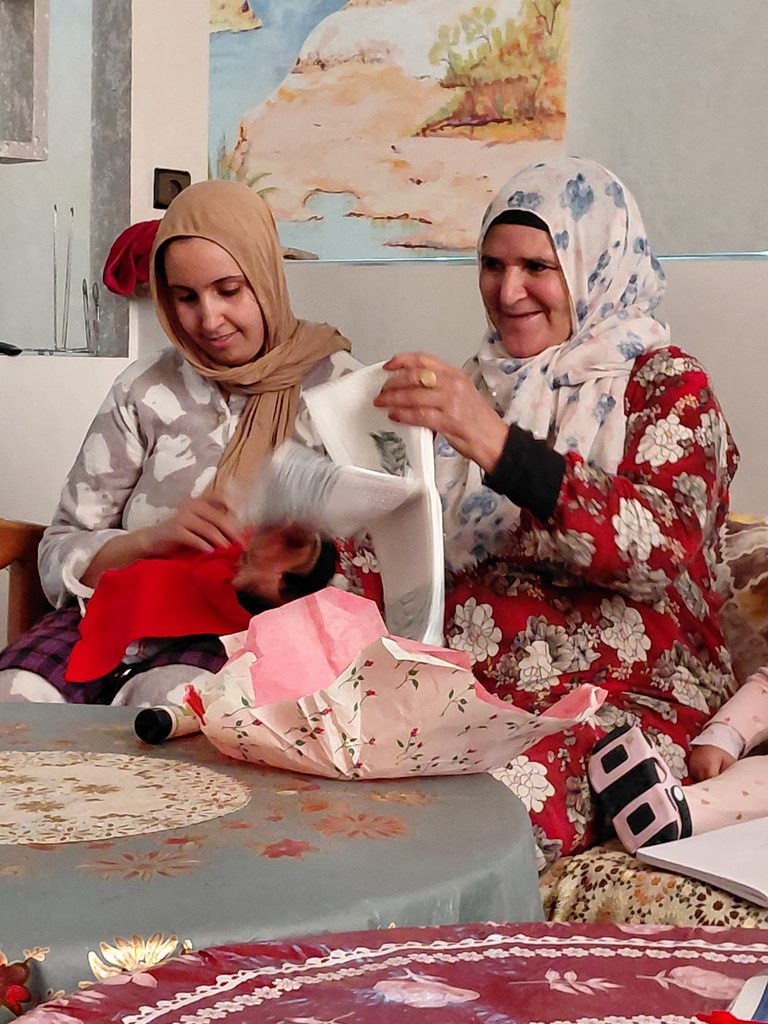
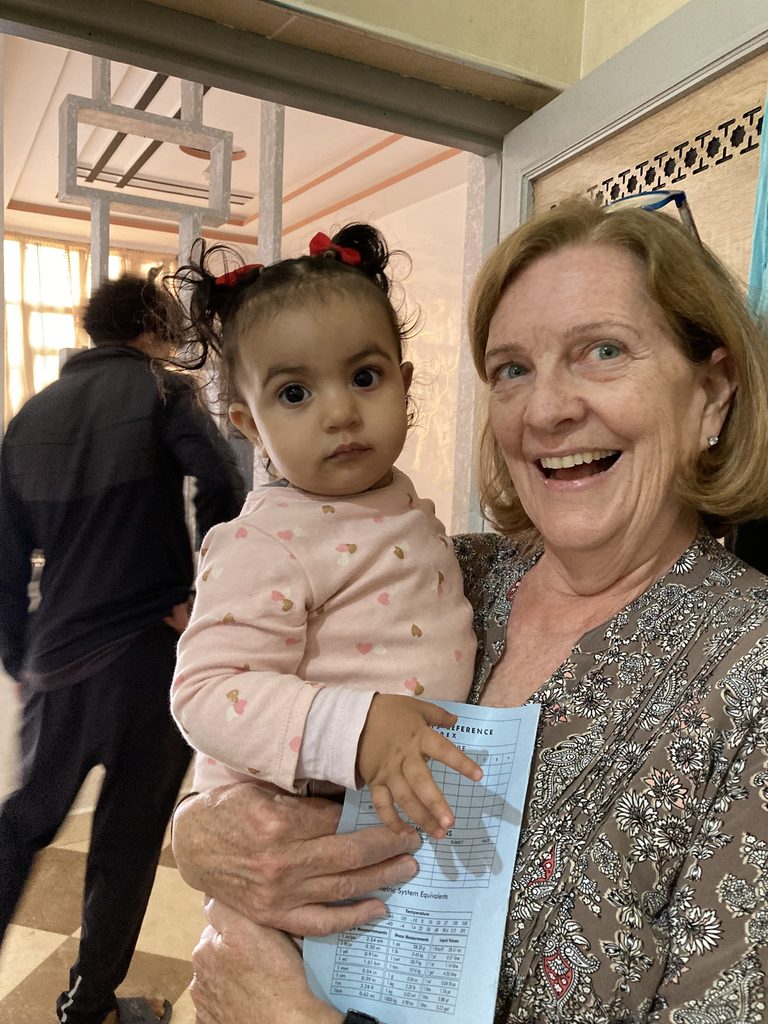
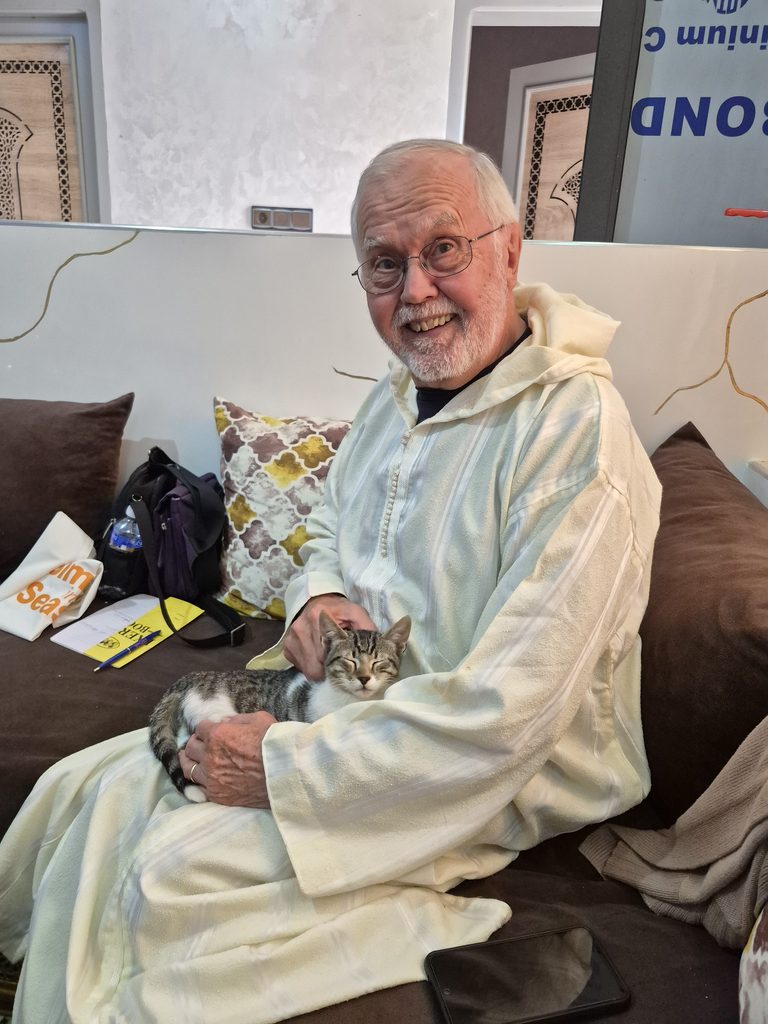
On arriving at the house we all paused to take off our muddy shoes (it had rained and there were no sidewalks or grassy areas) and put on the slippers we had brought before going upstairs to the living area of the house. There we were introduced to Moha’s mother, Fama, and his sisters-in-law, Fadoua, Fatima and the altogether adorable Celia who stole everyone’s hearts. Also, the cat. We offered small kitchen-themed gifts we brought with us, a bit of an ice-breaker.
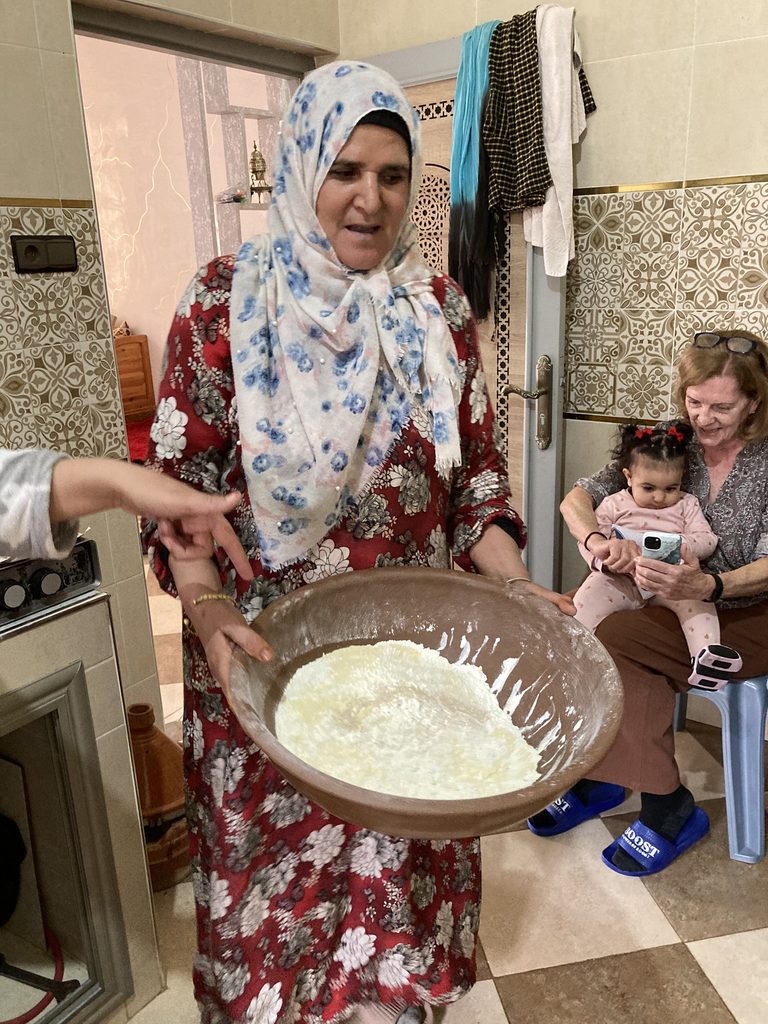
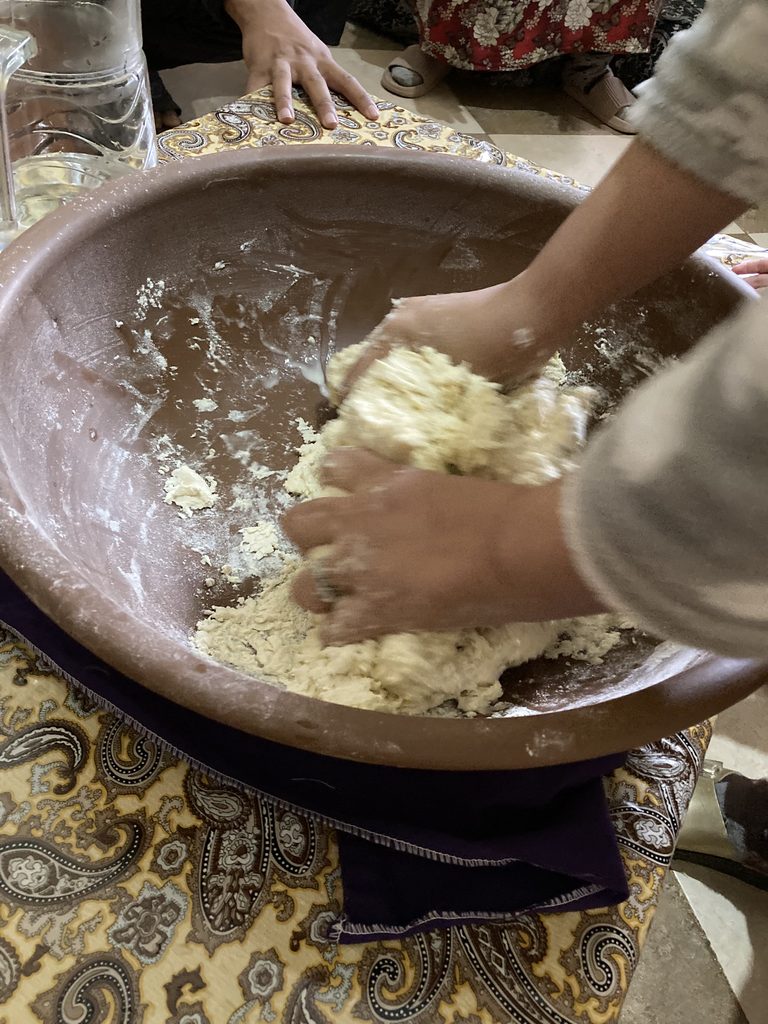
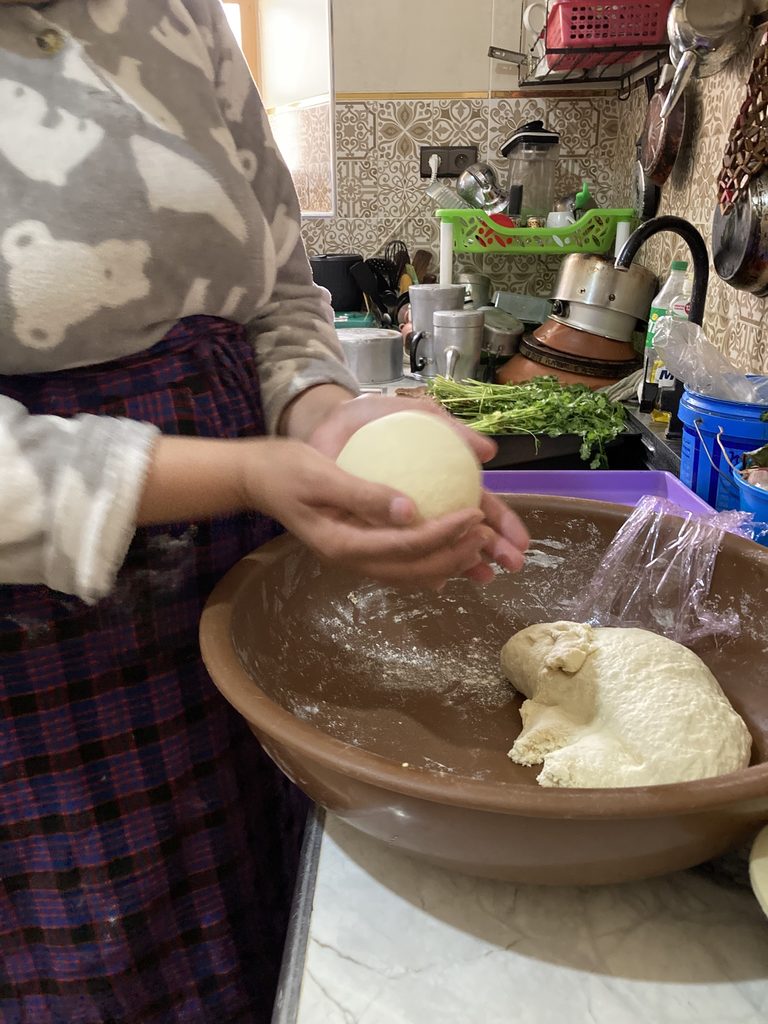
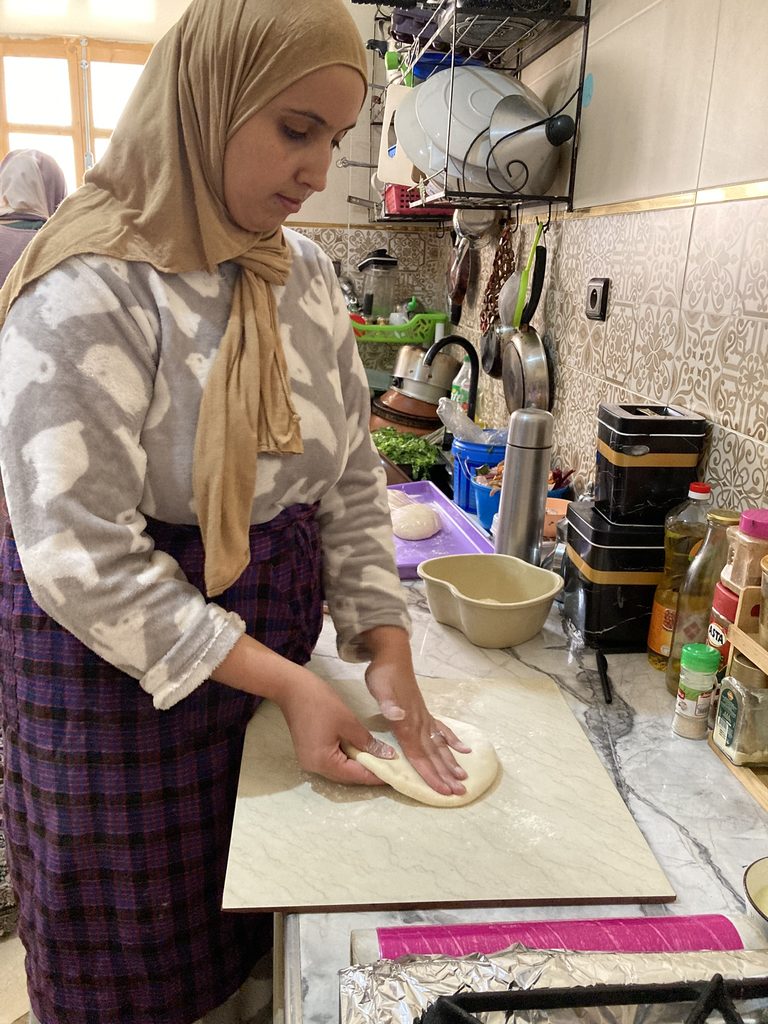
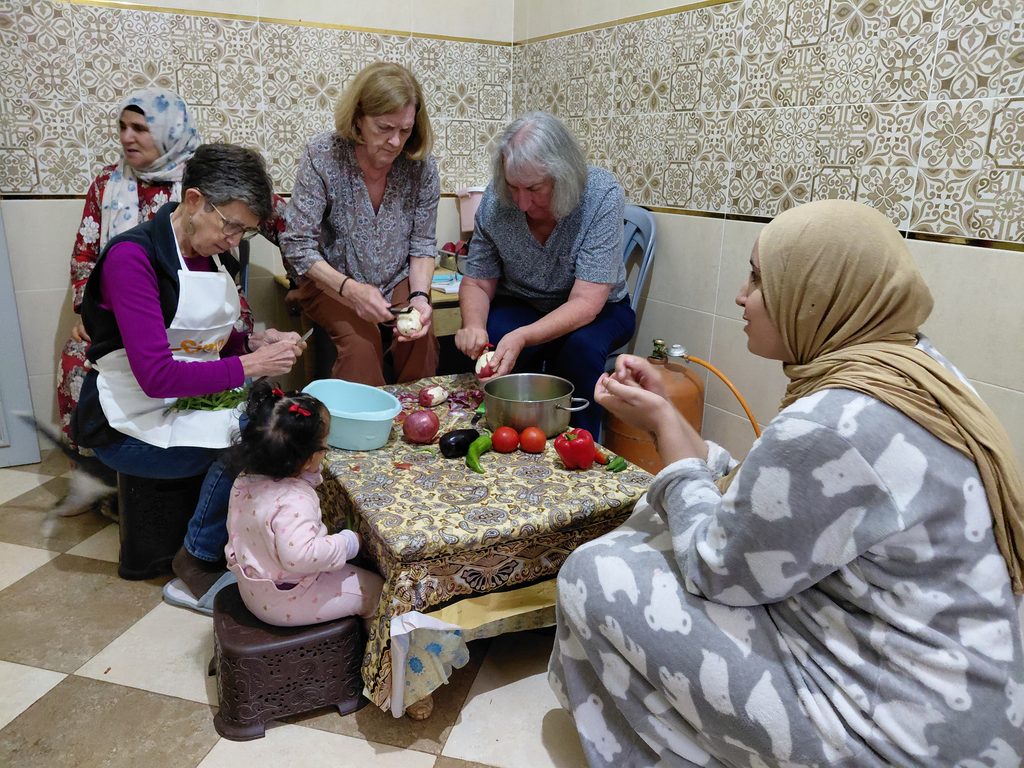
The cooking class began with preparing bread dough for rising. Fama showed us the waiting bowl of ingredients. Fadoua added water and kneaded it, giving Celia a little pinch of dough to play with. As Fadoua kneaded, she rocked gently back and forth. To everyone’s amusement Celia imitated her mother’s rocking although she rather missed out on the actual kneading with her hands. Fadoua divided the dough and shaped it into four balls which she let rest only a few minutes before flattening into rounds that were placed between tea towels and left to rise.
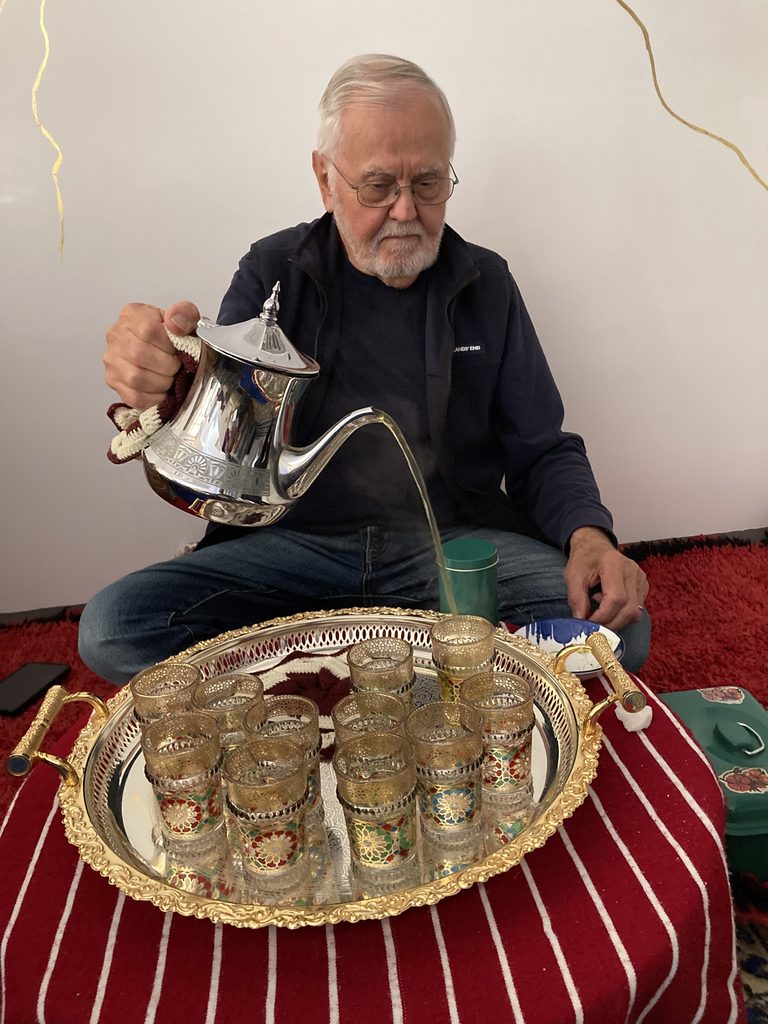
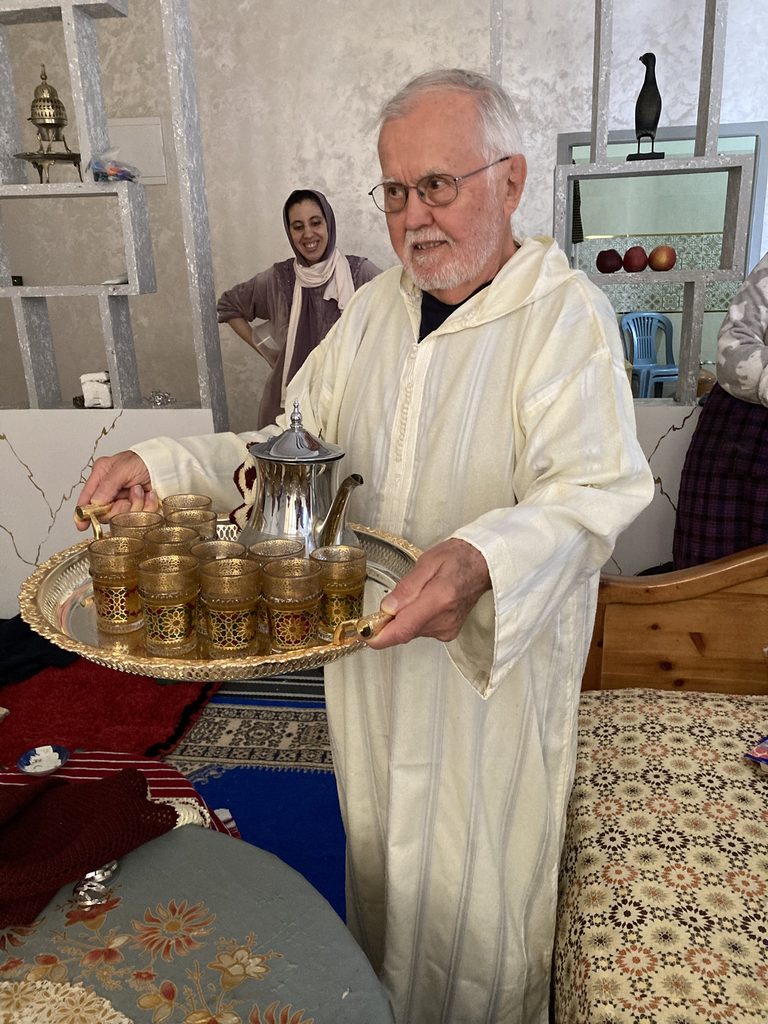
The wait created time for a tea break. Since a meal was coming, the tea was simpler but involved an apple cake and Wayne learning how to make and serve the tea. He was quite good at the high pouring that characterizes the serving of Moroccan tea.
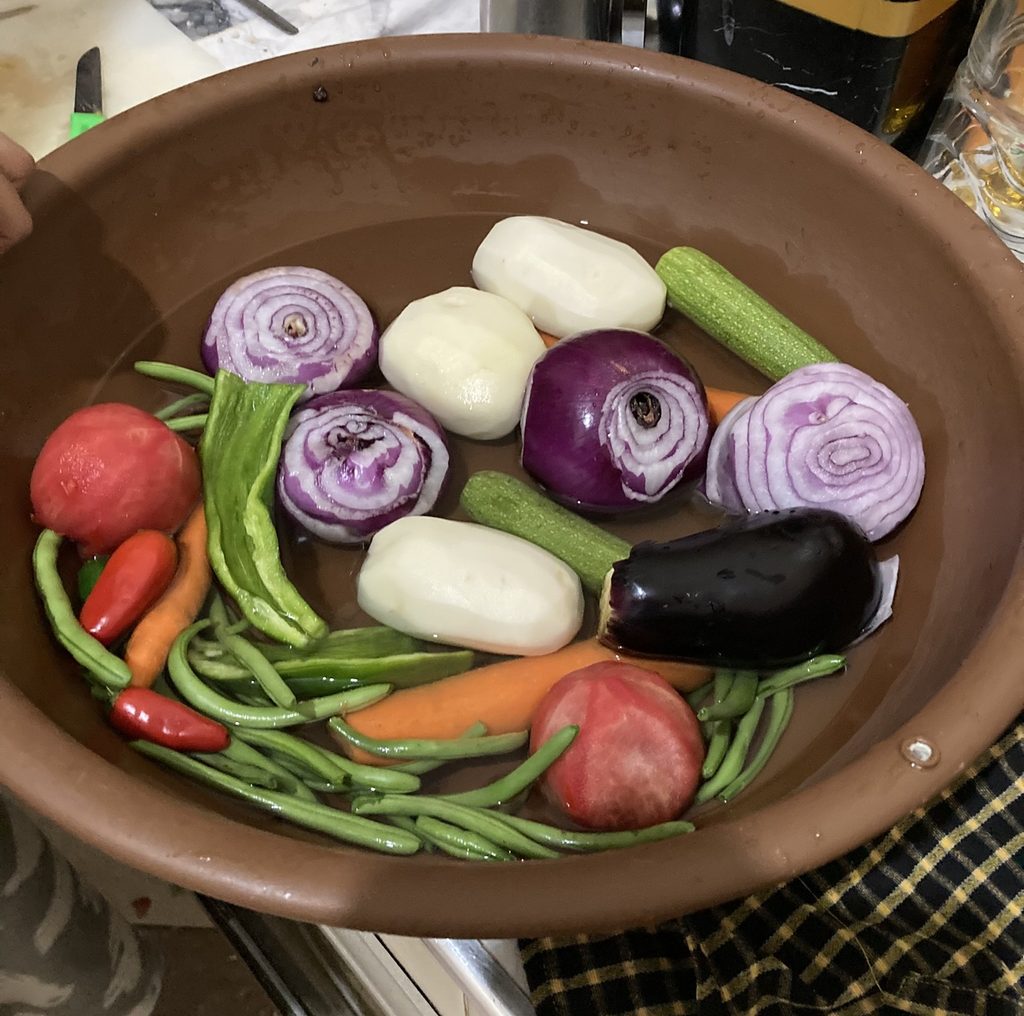
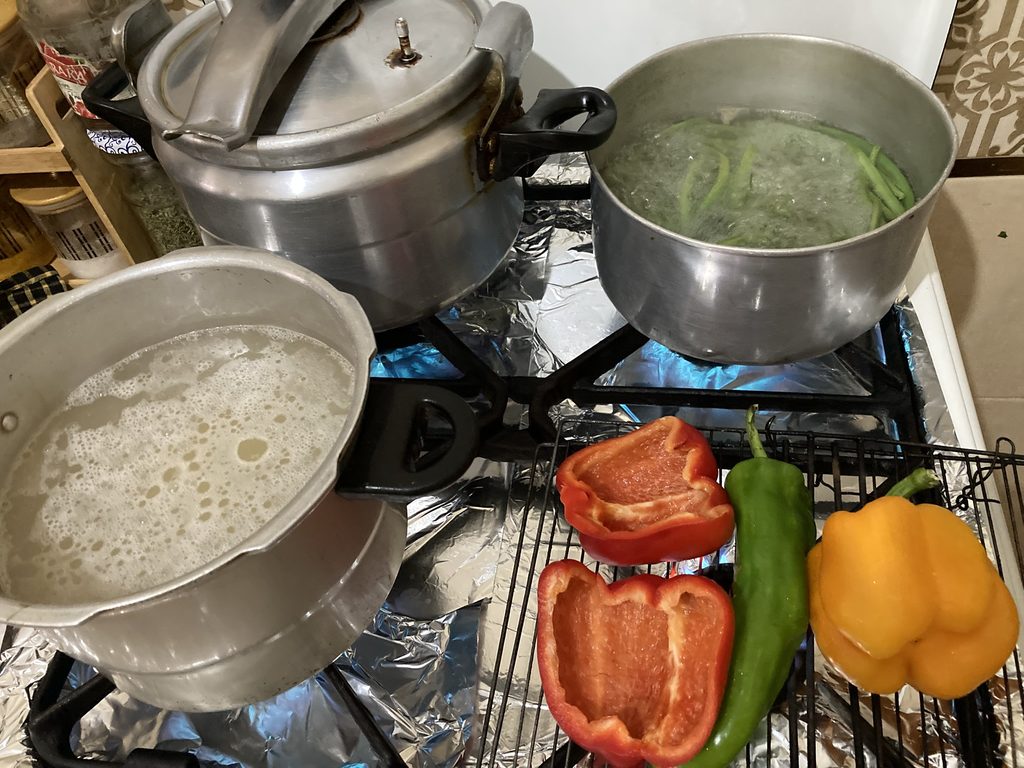
After tea, work began on preparing vegetables for the meal. We managed to “help” by peeling vegetables, a little like being given a pinch of dough to play with. We clearly were not doing the main work. Root vegetables cooked in a pressure cooker, rice boiled in an open pan, and peppers were charred over the gas flame of a stove burner.
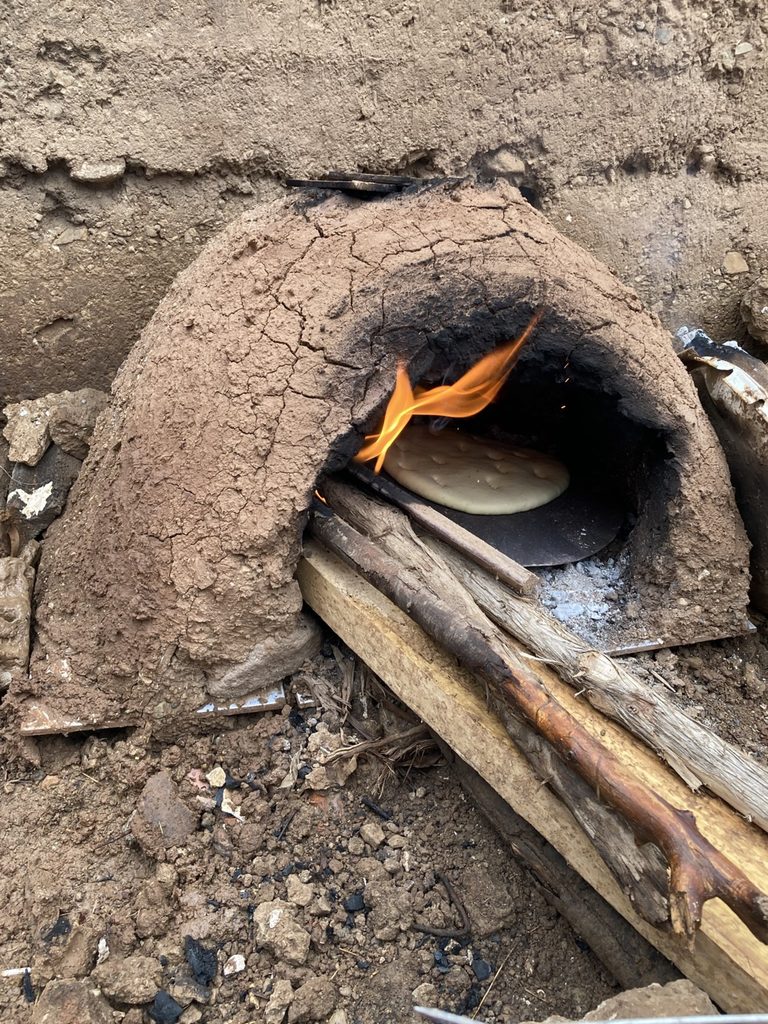
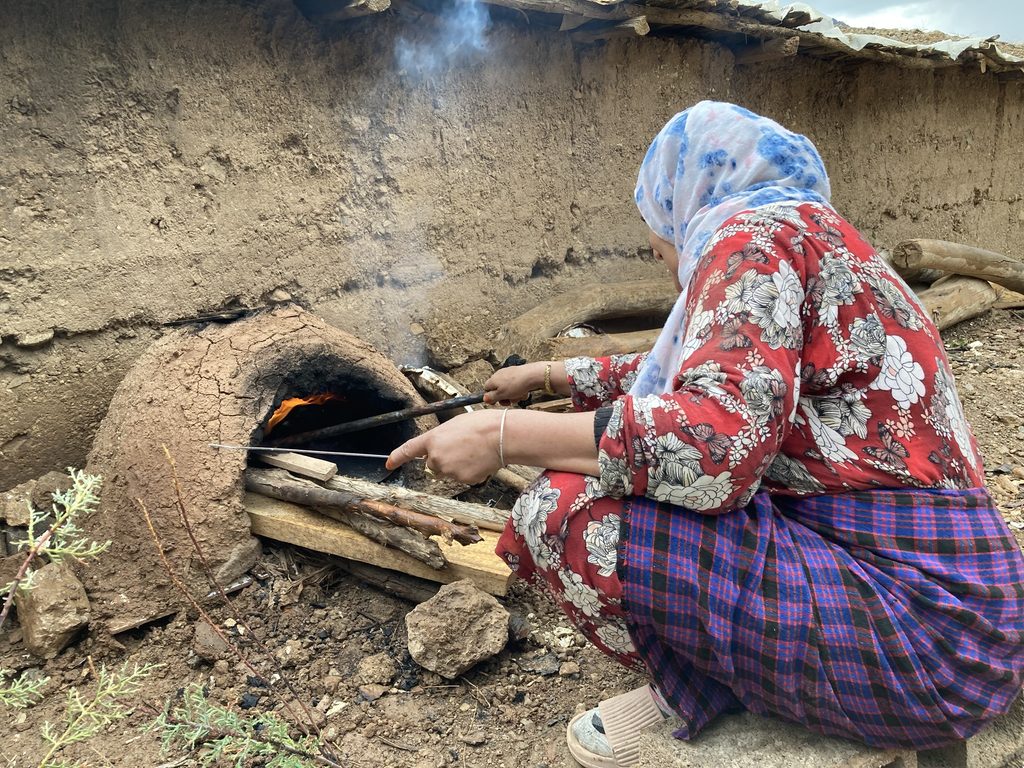
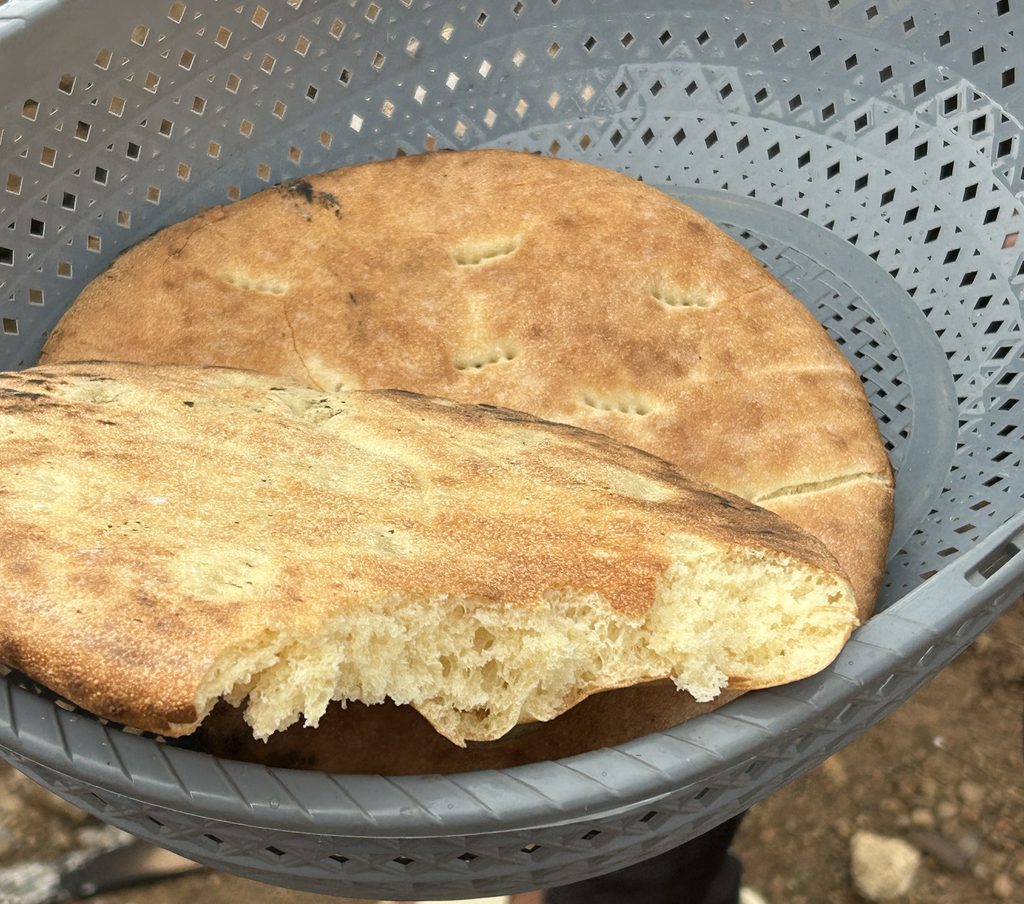
Then it was time to bake bread—outside—in a clay oven—in a chilly drizzle that later became rain. Moha’s mother squatted down to tend the fire and bake the rounds of bread on a flat metal surface on one side of the oven. We watched as she kept the fire at a good level and deftly slipped in one round after another, shifting them to bake evenly.
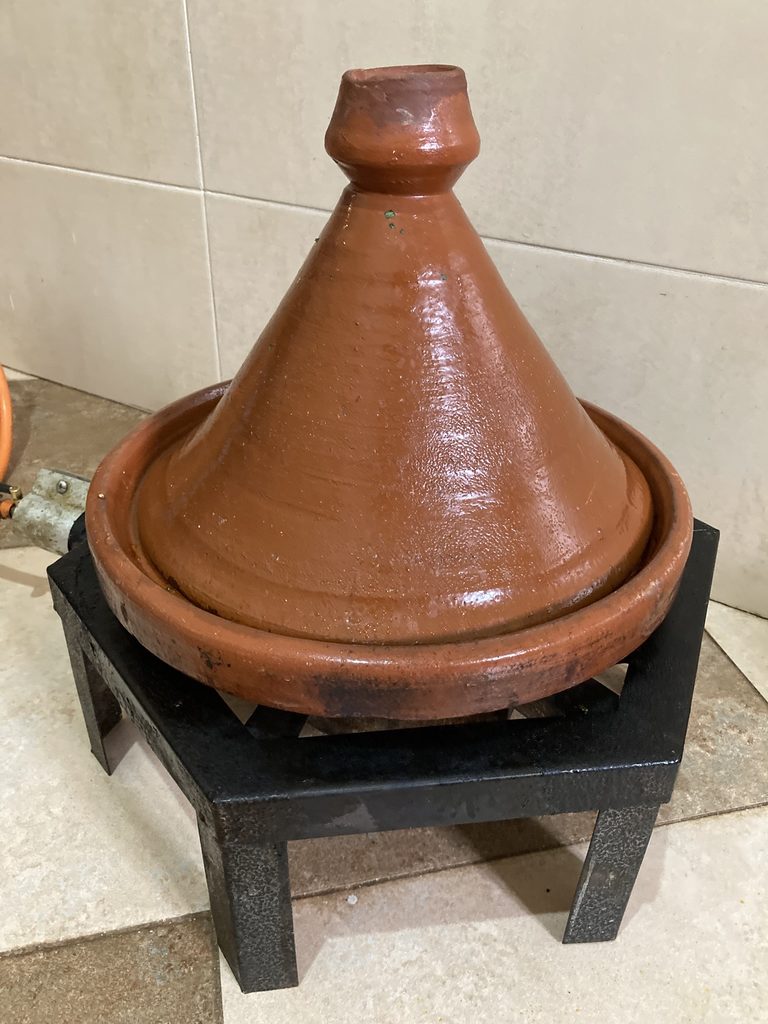
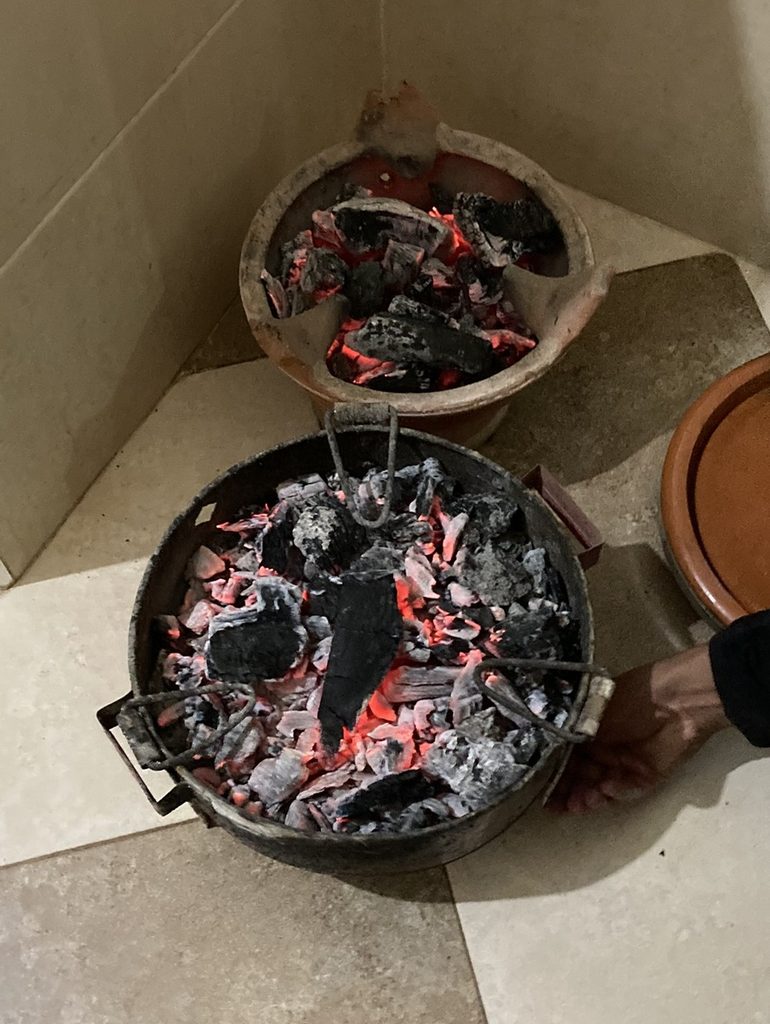
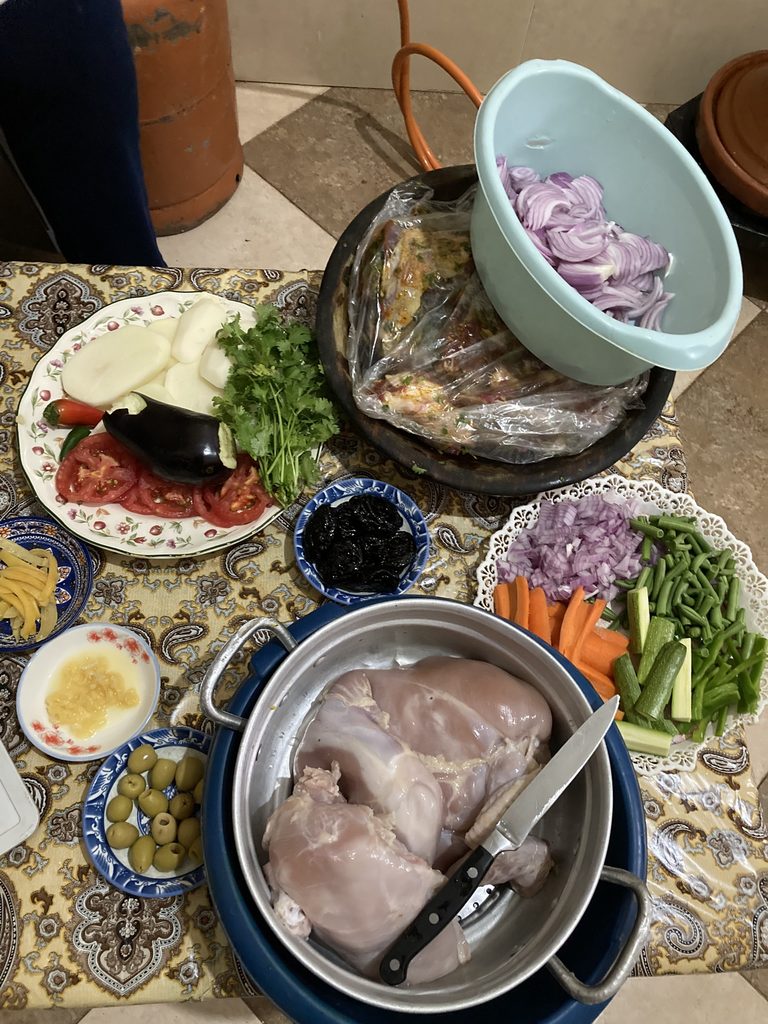
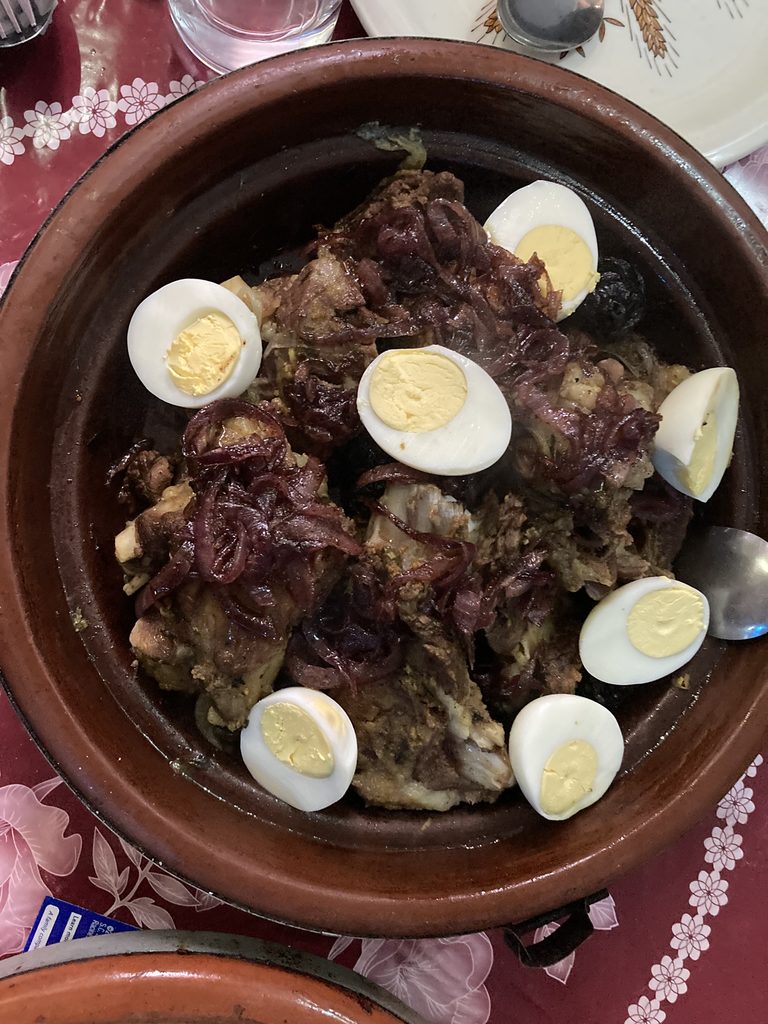
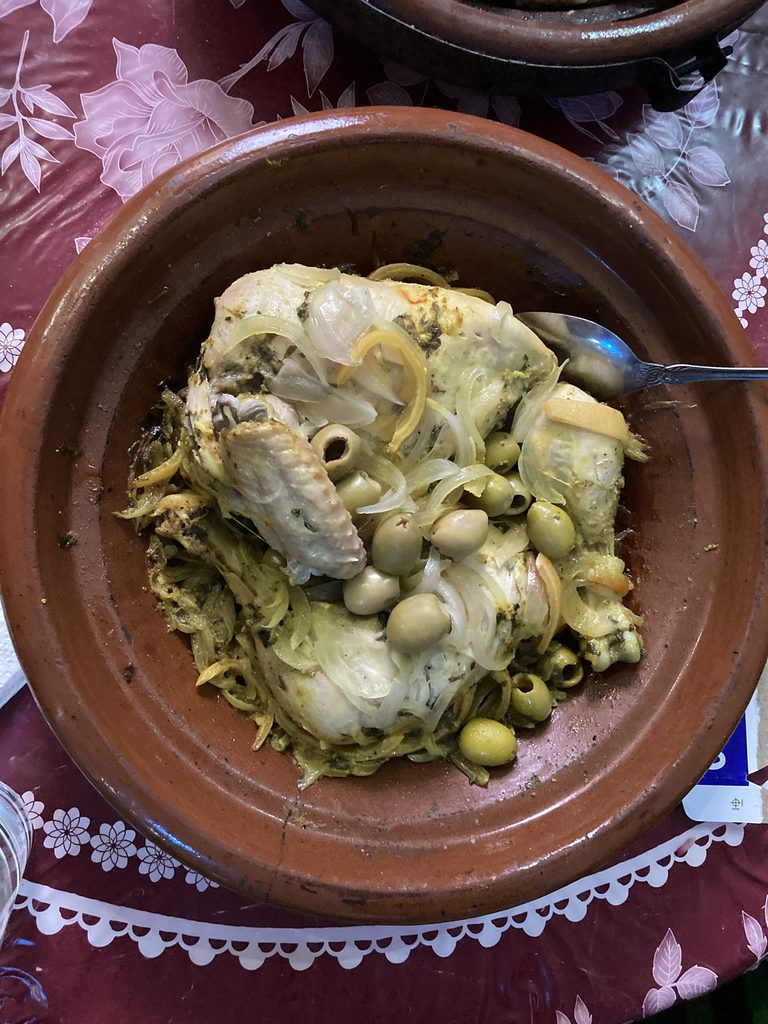
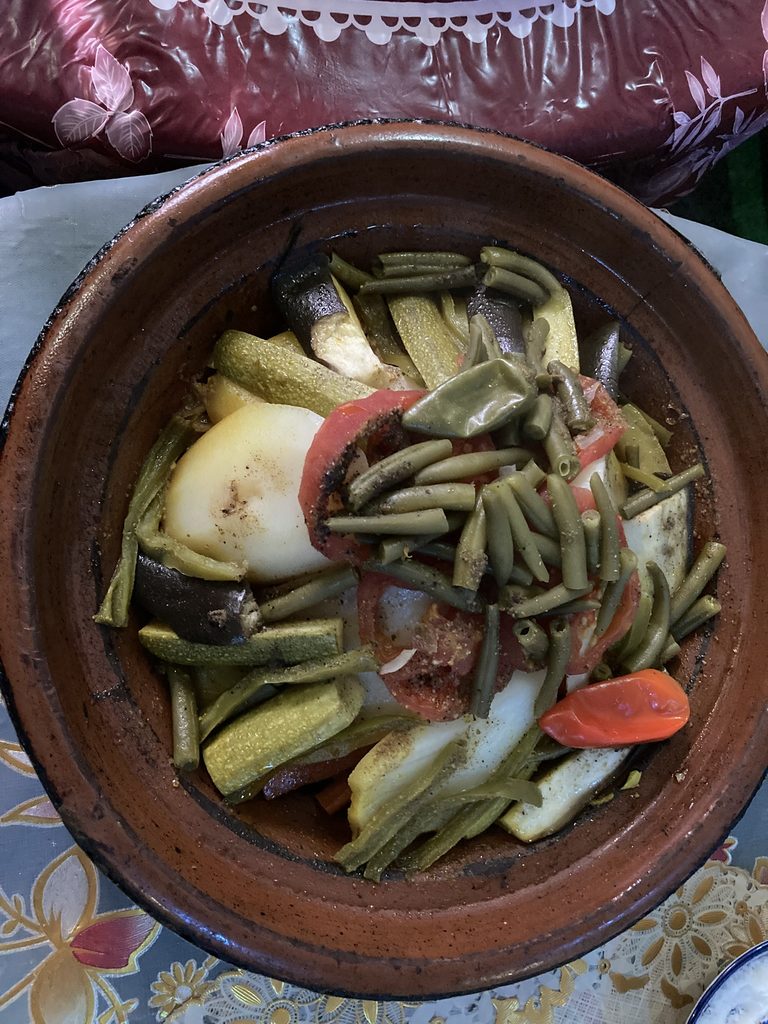
Back in the kitchen we watched Fadoua and Fatima prepare the tagines—meat sautéed briefly and then vegetables added. Each was placed on a charcoal burner that had been started with embers from the bread-making fire. They made three different ones—goat with onions, chicken with olives and preserved lemons, and vegetables (eggplant, zucchini, carrots tomatoes, green beans) with a piece of chicken for flavor and two uncut hot peppers on the top.
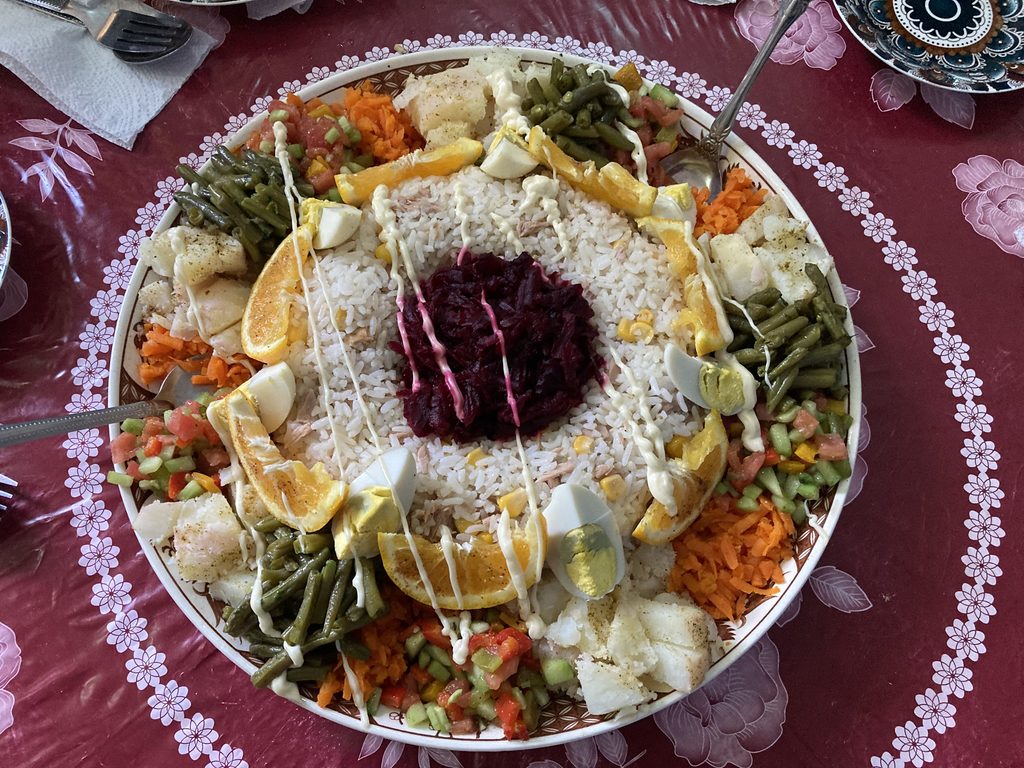
Once they were cooking our attention turned to the salad which began with cooked rice mixed with tuna and corn, packed into a bundt pan and then put out in the center of a large plate. Fatima arranged small portions of cooked vegetables around the rice—grated carrots, cubed potatoes, green beans, and Moroccan salad (chopped tomato, cucumber, and onion) with grated beets in the center. Quartered hard cooked eggs and sliced oranges garnished the plate along with a drizzle of mayo—a piece of art!
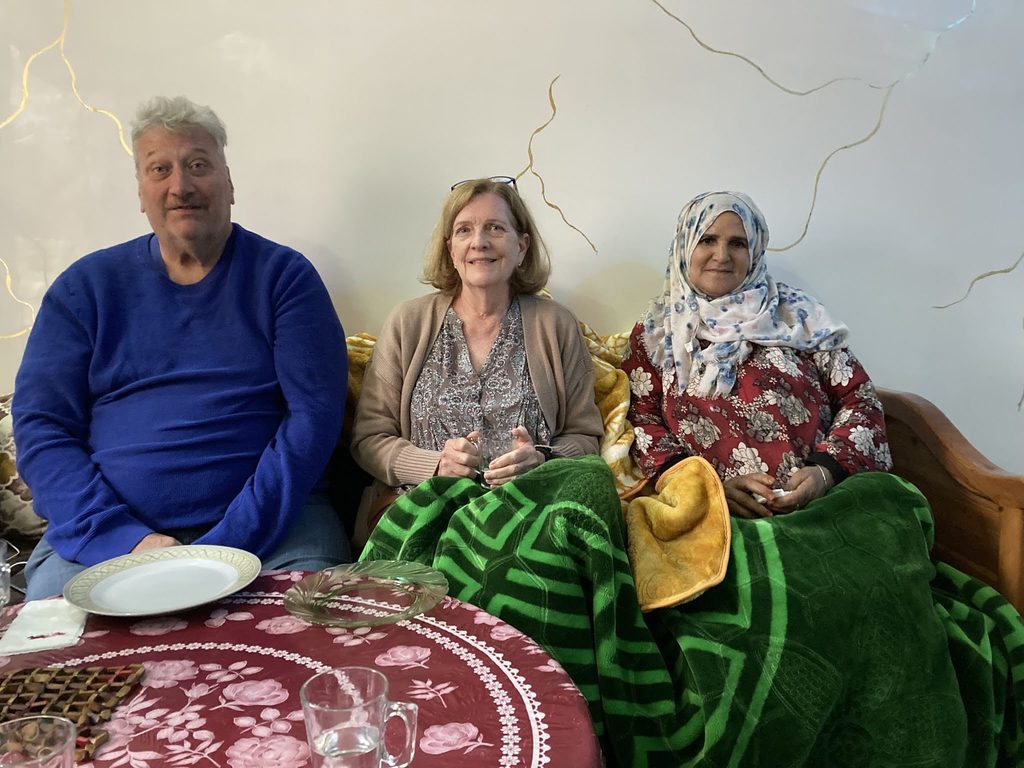
As we waited, we sat and visited. Fadoua could speak English, Doug Arabic and a bit of Tamazight (the Berber language), and Moha filled in the gaps in all three languages. Some communication did not have gaps—playing with Celia, holding the cat, the laughter. We sat beside each other sharing lap-blankets on the chilly, rainy afternoon.
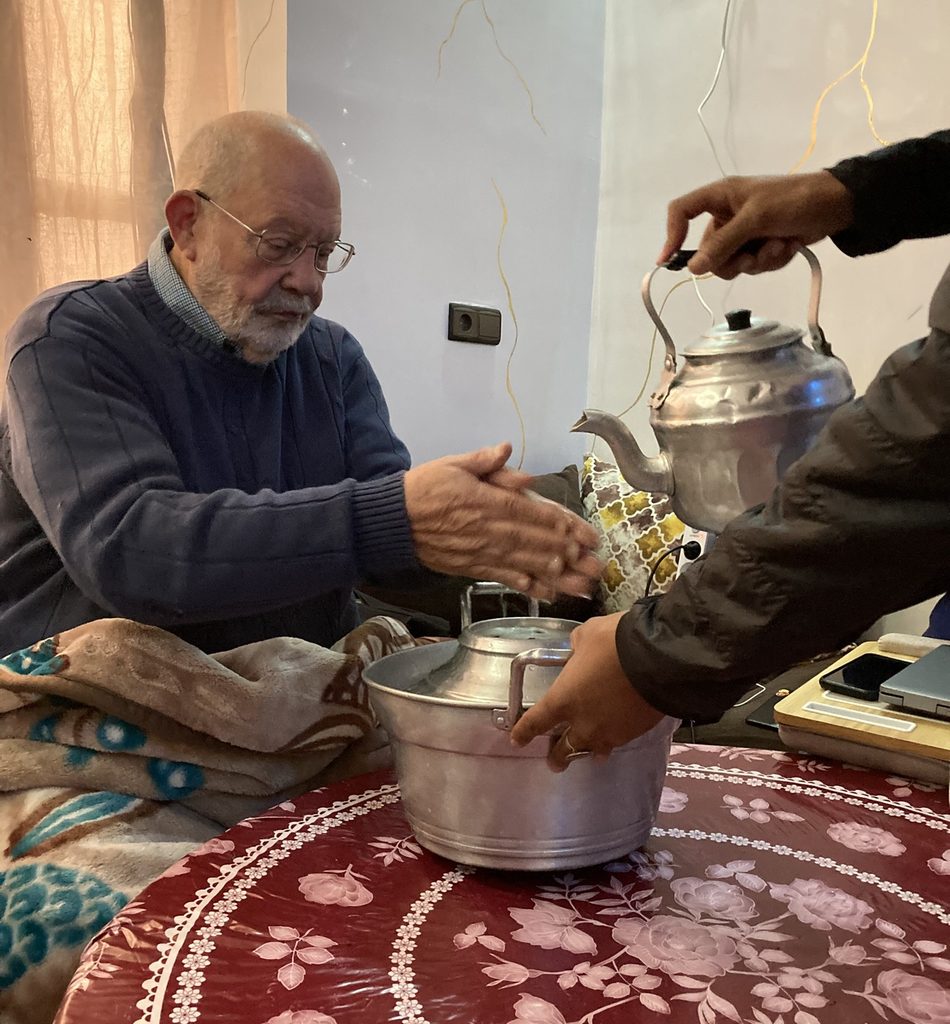
Preparation for eating felt both new and reminiscent of the communion and foot washing services of my childhood. Moha came into the room with a deep metal container and teapot and a red towel draped over his shoulder. He proceeded around the circle, pouring water over each persons hands and offering the towel for drying. While the conversation didn’t stop, and there was nothing serious about it, it felt like a deeply sacred moment to me, a ritual of hospitality, an offering of care.
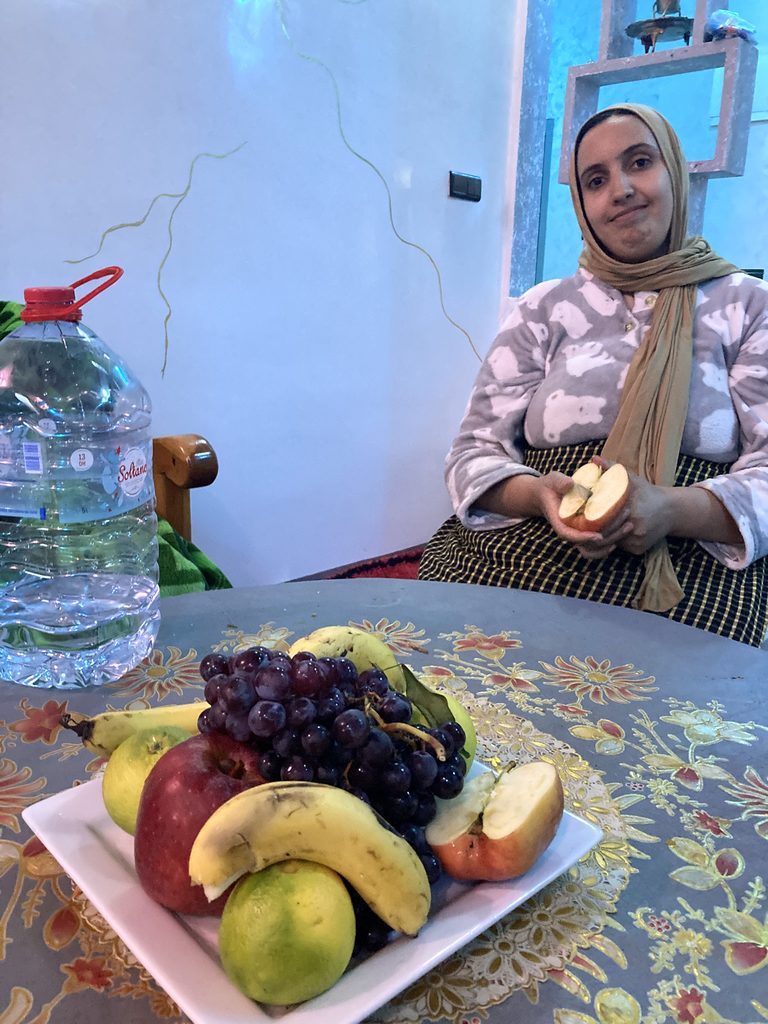
And then we ate—salad, bread, tagine, more than any of us needed, food made with love and offered generously. Fruit came as a sweet aftertaste to this day of learning and connection with people whose world is very different than mine, yet so alike.
I know much damage can be done by a rush to similarities without due respect for the differences. We did not spend enough time with Moha’s family to be confronted with the differences. A few hovered at the borders. I know there are more. What wasn’t at the borders but centered in our time together was the human experience of family, both theirs and ours, sharing of home and food, stories and laughter, love of children and even cats. As we left, Fadoua said to me, “We are sisters now. Whenever you come, you are welcome here.” I didn’t explore the meaning of that. It would take days and weeks and years of living nearby to learn its depth, but what is clear in her comment, is that we are now in relationship. Sharing in a WhatsApp group is the form it now takes. That is gift enough. Who knows what the future may hold?

Oh, Kathie, so wonderful of you to share this focused insight into the wonder of your adventure. I would love to see all the photos, hear your magical telling of all the many storied moments of your travelogue and imagine the incredible kindness, generosity and beauty you experienced.
And so you shall, when we are together. Wayne will be happy to show you as many pictures as you want and there will be lots of stories to go with them. You will have to let us know when you have heard and seen enough.